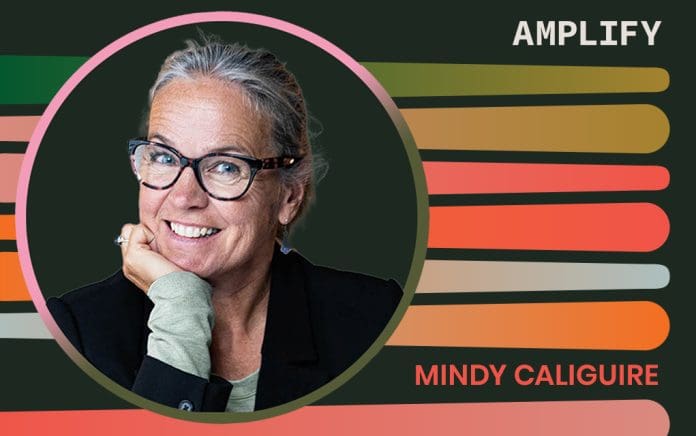
Mindy Caliguire: Becoming a Non-Anxious Presence in a Frantic Culture

Published by Outreach Magazine | December 9, 2024

Mindy Caliguire is the co-founder and president of Soul Care, an organization that cultivates soul health among leaders by providing pathways, practices and guides. She is the author, most recently, of Ignite Your Soul: When Exhaustion, Isolation and Burnout Light a Path to Flourishing (NavPress). She was also a featured speaker at the 2024 Amplify Conference for forward-focused church leaders and their teams. Preregister your team now for next year’s Amplify Conference.

In the following interview, we discuss burnout in the church, the need for church leaders to learn to rest well, and what she’s discovered about what it means to share your faith.

Are you seeing a different kind of burnout post-pandemic than you did pre-pandemic?

I don’t know, that’s a really good question. My view is that a lot of people were [either] burned out or were burning out, but we didn’t use that language as much. It was the water we were swimming in. A friend of mine, Stephan Tchividjian, said that before the pandemic everybody was swimming, and we were all naked—nobody was doing well—but when the pandemic happened, the tide went out. The level of awareness is higher than it was, for certain. It’s not that those [dynamics] didn’t exist, but we’re more aware and we’re more vocal about it, and we’re more willing to talk about it.

Alright, let’s be honest. How are we … actually? There’s a lot of burnout. Ministry leaders are exhausted. I mean, dirt-tired and isolated. There’s no isolation like ministry leadership. Leaders just need permission [to acknowledge] that taking care of their own soul is actually a first order priority, not something that happens once everything else is done—which is never the case. This was true of me back in the day. For me, in those days and with many leaders I’ve talked to since, it’s like you just stop believing that this stuff really matters to you anymore. Your job is just to make it available to everybody else, and you stop reading the idea that a yoke could be easy and a burden could be light, because it’s just too painful. What would it be like to bring their leadership from a place of overflow rather than a place of deficit?

One of the things I observe is that there is a growing number of leaders who are just refusing to keep doing the “crazy” anymore. And I think some of that is an emerging generation. I think it’s

those in their 20s and 30s, who are looking at my age group and above, who are saying, “I don’t want that life. And I don’t want to pay the price for my kids or my marriage that I’m now realizing was the price people were paying.

We have a lot of these massive public failures that have given a lot of people a bit of pause, like, Holy cow if that’s what was going on behind the scenes, how do I know that’s not true of the next 20 leaders that I look up to, and how do I know that isn’t [going to be] me someday. I think those are good points of humility, that growing refusal [to do the same things]. It’s huge.

Church leaders have always been optimistic, and everything around the next turn is great. What’s the next hill to climb, and all that kind of stuff. Now everybody’s been beat up pretty bad over the last few years, and I think any sort of naive optimism about how easy this is or any of that is … I don’t feel like I hear that as much right now. It is different and heavier than it was prior to the pandemic.

I have felt this sense—especially since social media and AI have become bigger and bigger topics of conversation—that our human tendency is to always aim toward efficiency: If I can do the same tasks faster in a shorter amount of time, that will be better. That will free up some magical space, we think. But then we end up filling that space that we created with more tasks. What do you think the key is to redeeming that time that we create rather than just using it as an excuse to pack our lives fuller?

I think it would be helpful for people to start to notice their tendency to cram more things in and possibly be avoiding what’s really going on inside. Now, that’s not to say that is what’s happening. That’s between them and God. I can speak for myself that there are times when I’m trying to cram—and I can tell. There’s almost like an avoiding of [being present] that comes. I think leaders need to learn to discern when is there this crank that just won’t stop, and what would it mean to just set that down for a minute.

AI can accelerate how fast we run into a brick wall, but it’s not the thing that’s causing the brick wall. It’s just the thing that makes us move faster and faster and faster toward really being inhuman. We lose our ability to be. And that is the biggest sadness.

I mean, it’s cool to find out what AI churns out based on everything that exists out in the interwebs. But what is your soul gonna hear from the living God, who is smarter than AI and what does the living God want to say to your circumstances? AI only looks backwards. AI can only draw from everything that’s happened before. We serve a God who is an expert in the future.

When we start moving away from time with the living God, what are we losing? We gain the whole world maybe, but we forfeit our souls. It’s keeping the soul connected to God in real time that is where we draw our life, that’s where we’re open to humility, that’s where we’re open to rest, we’re open to delight. These are a lot of the things that I’m bringing up in Ignite Your Soul.

What are some of the practices that breathe life back into our souls, not because of the practice, but because of how they connect us to the living God. Paying attention to where God is at work, participating with God and what God is doing, those are the practices that I am so excited for people to wrap their experience around, not just their mind, but to wrap their experience around, because that’s the gold. The thought of people connecting to God and then showing up to their families, neighbors, colleagues and organizations full, able to listen, at peace, at rest, able to work hard, but able to be used by God in whatever circumstance they’re in. That’s the lightning bolt. That’s the power. That’s where everything is. That’s what I long for.

That dovetails nicely with the opposite problem: The ways that we try to get rest are not always restorative. It’s almost like another aspect of burnout: If we’re not resting the right way then it’s not actually restoring us, and we may think we’re taking a break from the work that we’re doing, but there’s something inhuman about the ways that we rest.

I think that’s true. Greg McKeown, who wrote Essentialism, says, “The device in your hands is not a phone. It’s a three-trillion-dollar, military-grade, addiction-producing machine. And we are no match for it.” Recognize that you will not win the dopamine addiction battle with a device using platforms that are optimized to make you keep moving and addicted.

Now, can it have a place in your life that’s fun and culturally relevant and [provide] ways to keep in touch with people who are far away? Absolutely. But if you think that’s restorative—I mean, just look at us—it’s not restorative. It’s becoming a joke. It’s like, Yeah, I just wanna check what

my friend had to say, and then two hours later you’re still scrolling. And who took those two hours from you? That’s happened to me. I’m not saying I’m above it, but I think differently about it now because of that silly little quote. You’re not just reaching [for your phone] to respond to some notification. You are [pitting] your brain against a three-trillion-dollar addiction machine, and that puts it differently.

People have got to figure out how to actually experience rest. I work with a lot of leaders, and have for many years. One of the funny observations I’ve made is that high-powered leaders will leap tall buildings in a single bound, they will go days without eating, they will work on their budget, their presentations, their board decks, all this kind of stuff, but they won’t do a two-hour solitude assignment. I have found that rest is one of the hardest things for those leaders to do. It is like the hardest thing. They will do anything other than get quiet, put away their devices, and let go of outcomes.

I convinced a CEO that I work with to do a day retreat. He cleared his schedule at the end of his two-week vacation. I sent him a little solitude guide, [pointed] him in the direction of a book that I really love, and [later] I get this text: “Today has been life-giving in so many ways.”

My point is, for those who have the courage to carve out that kind of time, for those who have the vision that this will be not only worth my time, this will be generative to everything I care about, for those who have the willingness to be quiet in the presence of God—which can be scary, especially if you’ve been avoiding that—those streams of living water are a real thing. And I don’t even want to tether it to how much more effective that CEO is going be. That’s not the point. We become more human when we are alive to God and our bodies, our souls, learn to rest.

When we host—out here at Whisper Ranch—these concierge sabbaticals for very senior leaders, where it’s like, Give us the dates, we’ll figure out what you need, we’ll take care of it, the first two days before they’re here we put them up in a really fancy hotel. And it’s not just because like, Oh, bougie spa, whatever; it’s because I want people to let the noise floor drop and actually get into their bodies, because it is hard to do.

One of the first questions I’ll ask, like two or three days in, [is] how are the RPMs? And they’ll be able to tell me, Well, it’s just starting to slow, three days in. And that’s normal.

So how do we help people rest? It’s a pretty big theme in Scripture. In Isaiah 30:15, God says, “In repentance and rest is your salvation, in quietness and trust is your strength.” We love that, that sounds great. But the last part of the verse says, “But you would have none of it.” And the broader context is—it’s almost pathetic in a way (I mean that in the pathos sense)—it’s like, I cannot believe how much God wears God’s heart on his sleeve, so to speak. God is begging his people to trust him, and in that whole chapter context he’s livid, because they keep going and making alliances to secure their well-being with Egypt, with Assyria. You’ve got this, you’ve got your armies, you’ve got your iron chariots or whatever else is in there, and in the middle of this tirade about God being offended as a jilted lover and as the God of the universe going, What are you doing? In verse 15, he’s saying in repentance and rest is your salvation, in quietness—or unanxiousness is what that quietness idea is—in quietness and trust is your strength. But you would have none of it. And then he goes on to say, OK, you’ve made your bed; you get to lie in it. And then it goes on after that to say, But I am going to draw you back. My heart is toward you. God, even then, doesn’t leave them.

It is haunting to me, haunting to think that the supreme mover, the uncaused cause of the universe, is saying to little tiny humans on this little green rock, “In repentance and rest is your salvation, in quietness and trust is your strength.” And I feel like we run after all kinds of things surging for our well-being as well. I do. It’s like, Oh, if I only had the right team or bank account or social media or this or that or the other thing—each of us has a list of things that in our heads are like, Oh, if we had that, everything would be fine. Again, they’re not, in and of themselves, a bad thing. But we leave off being a branch that’s connected to a vine. We leave off seeing God as our first order priority, as our first resource, as our first love. If God leads us to whatever that alliance is, or whatever that business strategy is, so be it. But that’s why we want to be alert to his whispers, so we can hear.

I think that’s God’s ache—if we could imagine him peering into our realm, watching the leaders of the body of Christ killing themselves to try to let a message of life be known—[he’s] saying, “I’ve done it all. I’ve made it all. Rest is available to you. My strength is sufficient for you.” So, I hope people will [rest]. It’s the hardest thing for leaders to do, and could be one of the most important.

I think a lot of church leaders think of evangelism as something that we do. Of course, it flows from our own faith, but we feel the sense of obligation that pushes us forward. What would it look like, from your perspective, [for] evangelism [to come] flowing from our identity in Christ, rather than something that we feel like we’re being pushed to do because of the Commission. 

I am particularly compelled by the alignment of the message of soul care to the call to evangelism. Often those get split apart [but] they’re actually quite tied together. Our world desperately needs people who are marked by inner peace, who can carry the shalom of God. It’s almost hard to remember somebody in your life who was a non-anxious presence. As we become the kinds of people whose deep rootedness in God in real time [is on display], what could happen? What could happen to the name of Jesus in our country and beyond if, increasingly, the people of Jesus are marked by the way of Jesus and the character of Jesus?  

I have never considered myself a very evangelistic person. I care about the cause. When my husband and I were at Willow Creek for a church planting internship back in the day, I would say that was when God really started to activate my heart for people who didn’t know God. So then we go to Boston to plant a church, which is all about reaching a culture, reaching a people, etc. And I’m building friendships with other women that are at the health club with me.

[After] my own soul care collapse, I’m in a rebuilding [phase] where learning to be authentic in my own skin was a huge thing. I had operated so much out of my head. I had operated so much out of what needs to be done, what’s the conceptual model? Drive. Drive. Drive. I needed to learn new ways of being in my own skin, being with other people, being with God. Those were huge areas of growth for me in that time.

So, then I started to notice things differently in the health club when I was building friendships with another mom of boys. I had three young sons, and so did she. She was from a Jewish family in the area. She asked me how I was doing one day. And the prior version of me would have been trying to position, Oh, a follower of Jesus is joy-filled, and I would have had a plastic version of me that I would have answered that question with, because I would have wanted her to have a high view of life with God. That was what I thought you were supposed to do. And

I found myself gut-checking, like, That’s just not honest. You’re having a hard day. You don’t know how to solve this thing with your four-year-old. So I decided to answer honestly, and I’m having this much more authentic conversation with somebody who has no interest, that I know of, in Jesus or church or anything. I was saying what was hard, and she kept probing a little bit more and it got to [the point of her asking], “What do you do when you don’t really have hope for that kind of a thing?” I knew she was asking me because she wondered how I was, but I knew she was also kind of asking for herself.

I found myself fighting for new words to describe how my faith was helpful to me in the areas of my fears and doubts and insecurities. There was no prefab tell your testimony thing going on here. This was me in real time translating. I wasn’t doing Christianese—which I was getting rid of for the most part anyway—I was just talking to my friend about where confidence in God was helping me, or where I was trying to have confidence. I came away from that conversation, which was one of the most life-giving, beautiful conversations. And I thought, Oh, this is what sharing your faith is supposed to be. I thought sharing your faith meant sharing the beliefs about faith. Instead, what I found myself doing that day was actually having to share my faith: What was I holding out hope for, and how did I explain that to somebody who had no religious context?

It makes me think of 1 Peter 3:15, about always being ready to give an explanation for the hope you have within you. And I find that a lot of Christians are ready to give an explanation for why they think they’re right. They’re ready to give an explanation for why they think the Bible is credible. Those can be very important conversations. But this is back to the evangelism [question], are Christians actually filled with hope right now? Could they explain to somebody the hope they have? And that’s what gets us to a non-anxious presence. That’s what gives us the ability to say, “I have hope in a living God, and it’s changing how I interact with my four-year-old, and it’s changing how I think about our mortgage that’s due next month, and it’s changing how I think about my value, my worth as a person.

I’m compelled with people living a way of life that keeps them connected to God, that naturally flows into conversations with people they love and know and care about. And I think the more grounded we are in God, the more able we are to actually give a flying rip about the family that lives next door or the person next to us on the train. We’re not so self-absorbed that we can’t see people, not as projects for our evangelism, but because we love them and we care. It opens up our capacity to care.

More resources like this

Mobilizing GenZ to Reach Their Peers

Join us for a practical, hands-on experience that will help you understand more about what defines Gen Z and their views on evangelism, learn about strategies that God is using to introduce Gen Z to the gospel, and apply proven principles for mobilizing this generation for mission.

Kathy Kurda Petrash
Bill Kollar

Kathy Hurda Petrash is the Director of Strategic Partnering, Christian Colleges with Cru. Bill Kollar is the Director of Evangelistic Initiatives for Cru.

John Jenkins

First Baptist Church of Glenarden

Pastor John K. Jenkins Sr. is senior pastor of First Baptist Church of Glenarden and the Chairman of the Wheaton College Billy Graham Center African American Church Evangelism Institute. Pastor Jenkins also serves as the chair of the National Association of Evangelicals and is on the board of World Vision, U.S., Denver Seminary and GlocalNet.

Fundraising and Church Economics: Why Tithes and Offerings are No Longer Enough and What You Can Do About It

In this breakout, Mark will tackle the growing challenge facing pastors and ministry leaders around finances and resources. As economic models in North America change, churches that will thrive are those who are thinking innovatively and creatively about how to leverage their assets and resources to sustain effective ministry. Drawing upon his work with the Mosaix Institute, Mark will offer leaders practical insights into how to build effective and healthy financial models as well as what leaders should expect in the coming decades.

Mark DeYmaz

A thought-leading writer and recognized champion of the Multiethnic Church Movement, Mark DeYmaz planted the Mosaic Church of Central Arkansas in 2001 where he continues to serve as directional leader. In 2004, he co-founded the Mosaix Global Network with Dr. George Yancey, and today serves as its CEO/president. Mark has written seven books including The Coming Revolution in Church Economics (Baker, 2019) and Building a Healthy Multi-Ethnic Church (Jossey-Bass, 2007). He is a contributing editor to Outreach magazine.

Joe Boyd

Grace Fellowship

He is a small town guy with God sized dreams. Even as Grace Fellowship grows larger, you can always find Joe hanging out before and after services. Joe believes that we are not a church with a mission, rather a mission that has churches! Before coming to Grace, Joe started one of the fastest growing churches in America and was recognized as a John Maxwell Top 100 Transformational leader. Joe and his wife, Michelle, are passionate about adoption and love their kids, Dre, Koehn, Robin, Ryan and Hannah.

Leadership RoundTable: Pastoring a Multi-Ethnic Church

In this Leadership RoundTable, learn from four pastors as they walk through their experience shepherding congregations and communities through the journey of multiethnic leadership. Each pastor brings unique leadership perspectives and convictions, sparking a conversation about what they see as opportunities and challenges for other pastors to learn from as they seek to lead a church that welcomes the full breadth of God’s Kingdom.

Aubrey Sampson
Greg Armstrong
Joyce Dalrymple
Daniel Kim

Aubrey Sampson is the co-planter and teaching pastor at Renewal Church in Chicagoland and teaching pastor at Timberlake in Seattle, as well as the author of several books including her upcoming release, Big Feelings Days.

Greg Armstrong is the founding and lead pastor of Renew Church, a multiethnic church community in Chicago’s western suburbs. Greg also serves as the Director of Renew Collective, a community of songwriters, musicians and artists, and the host of The Gospel and Race Podcast. 

Joyce Koo Dalrymple is a pastor, speaker, and podcast host. She leads Refuge for Strength, is on the teaching team for Church360, and regular speaker at churches and retreats Joyce received a BA from Stanford University, a JD from Boston College, and an MDiv from Metro Atlanta Seminary.

Daniel Kim is the Student Pastor at Gospelife Church. As a third-culture kid born and raised in Korea and Japan, he has been deeply influenced by multiple cultural experiences. Daniel earned his MA in Intercultural Studies from Wheaton College and is currently pursuing a DMin at Southern Seminary.

Troy Gentz

Freshwater Community Church

Troy is the Lead Pastor of Freshwater Community Church in the small town of Paw Paw, Michigan.  He planted Freshwater in 2005 with a passion to see unchurched people reached with the gospel.  Troy has been married to his wife Carrie for 29 years.  They have 3 grown children, live on a gravel road with free range chickens.  In his spare time, Troy loves cheering on his Chicago Bears, eating fried chicken, building things, and lumberjacking on his property. 

Election-Year Politics: Navigating Faithfully in a Season of Division

In this season of division, this breakout offers a guide to navigate the rocky waters of politics. Avoiding the pitfalls of partisan hyperbole and demonization, Dr. Amy Black will provide insights for pastors and church leaders striving to understand how to lead their people amid such turmoil. This breakout will emphasize non-partisan and gospel-centered strategies for leaders, fostering dialogue in how to lead faithfully.

Amy Black

Amy E. Black is Professor of Political Science at Wheaton College (IL). She earned her Ph.D. in Political Science at M.I.T. A specialist in American Government, her research interests include religion and politics, the Presidency, and Congress. She is a past president of Christians in Political Science and served as an American Political Science Association Congressional Fellow in the office of Representative Melissa A. Hart.

Daniel Im

Beulah Alliance Church

Daniel Im is a dedicated pastor, Bible teacher, writer, and podcast host with a deep passion for the local church. He currently serves as the Lead Pastor of Beulah Alliance Church in Edmonton, Alberta, and has authored several impactful books. His latest work, The Discipleship Opportunity: Leading a Great-Commission Church in a Post-Everything World, reflects his commitment to equipping churches for effective ministry. His other books include No Silver Bullets: Five Small Shifts that Will Transform Your Ministry, Planting Missional Churches: Your Guide to Starting Churches that Multiply (2nd Ed), and You Are What You Do: And Six Other Lies About Work, Life, and Love.

With an M.A. in Global Leadership from Fuller Theological Seminary, Daniel has served in various church contexts, from church plants to multisite churches, across cities such as Vancouver, Ottawa, Montreal, Korea, Edmonton, and Nashville. His podcasts have garnered over 3 million downloads, and he co-hosts the IMbetween Podcast with his wife, Christina, where they provide tools for building strong marriages and families. Together, they also speak at FamilyLife Canada’s Weekend Getaway Marriage Conference.

In addition to his pastoral and writing ministries, Daniel is a Bible teacher for 100 Huntley Street, Canada’s longest-running daily television show. Married to Christina since 2006, they are blessed with three children.

Transforming Church Evangelistic Culture for Lasting Change *CEI Alumni Exclusive*

AACEI and CEI alumni, please join us for an inspiring workshop focused on empowering churches to maintain and amplify their evangelistic impact long after completing our cohort programs. We will delve into successful strategies for sustaining momentum and explore ways the Wheaton College Billy Graham Center Evangelism Institutes can further equip and support your journey towards a dynamic and enduring church culture. Be ready to engage and share, as we learn together how to drive lasting change in your ministry!

Sean McDowell

Sean McDowell is the Director of the Church Evangelism Institute and an ordained pastor in the Evangelical Free Church of America with over 27 years of ministry Experience.

Rick Richardson

Wheaton College

Rick Richardson is a Professor of Evangelism and Leadership at Wheaton College and directs the Church Evangelism and Research Institutes for the Wheaton College Billy Graham Center. He founded the Church Evangelism Institute, working with hundreds of pastors to revitalize churches through conversion growth. With 25 years in campus ministry and experience as InterVarsity’s National Coordinator of Evangelism, Rick is also an ordained Anglican priest. He has published six books, including Evangelism Outside the Box and You Found Me, and is passionate about evangelism, prayer, and racial reconciliation. Rick and his wife, Mary Kay, have three boys, and he enjoys fly fishing, tennis, and writing a science fiction novel in his spare time.

The Digital Sanctuary: Creating Sacred Spaces on Social Media

In this breakout, we will focus on how to maximize a local church’s limited resources to minister on social. I’ll highlight some best practices that have come out of the research (a bit on the spaces and places paper), some research I’ve done since then on practical best practices, and then I’d like to reach out to Sarah Dawes, who is the Communications Director for Calvary Church of Naperville, to have her and some of her team participate in a group discussion. They have a really strong sense of how to use social well so I think having a church that is doing it well but still very much in progress would be a good way to add flesh to the concepts for those in attendance.

Todd Korpi

Dr. Todd Korpi is a pastor, missiologist, and researcher, currently serving as the Church Planting Commission Coordinator for OneHope and Lead Researcher of the Digital Mission Consortia at the Wheaton College Billy Graham Center.

D.A. Horton

California Baptist University

D.A. Horton, Ph.D. serves as an Assistant Professor and Program Director of the Intercultural Studies program at California Baptist University. He is also humbled to serve as an Associate Teaching Pastor at The Grove Community Church in Riverside, CA. D.A. and his wife Elicia have been married for 21 years and are blessed to have two daughters and one son.

The God of Props: Seeing the World through the Lens of Redemptive Need

In this breakout, Pastor Steve will lead pastors and ministry leaders through a session on how to communicate effectively the deep truths of God’s redemptive story. Drawing upon his experience as a leader at Willow Creek Community Church during its season of upheaval, Steve will outline how the grief, trauma, and pain of those around us are compelling opportunities for gospel healing. This opportunity requires critical and nuanced skills, yet offers untold potential for preachers to engage their community afresh with the gospel of Jesus.

Steve Carter

Steve Carter is a pastor, speaker, author, podcast host, the former lead teaching pastor of Willow Creek Community Church, and the author of several books including The Thing Beneath the Thing.

Mindy Caliguire

Soul Care

Mindy Caliguire is the co-founder and president of Soul Care. As an organization, Soul Care cultivates soul health among leaders by providing pathways, practices, and guides to help them personally flourish and achieve missional impact. Mindy serves as the collaboration lead for leadercare.us, and in the past served in executive leadership both in marketplace and ministry. Soul Care serves ministries and organizations across the US and beyond including ECFA, C-12, Compassion International, The Navigators, Christ Church of the Valley, Dallas Theological Seminary, Plum Creek Church, and many more. Mindy’s most recent book is Ignite Your Soul: When Exhaustion, Isolation, and Burnout Light a Path to Flourishing.

Welcome at the Table: How to Mobilize Families your Church Reach your Community

In this breakout, Kelli will draw upon the extensive and substantive work of MomCo in mobilizing the whole church for mission throughout North America. This breakout is designed specifically for pastors ready to revolutionize their approach to church engagement, drawing out innovative strategies and actionable insights that foster a vibrant, engaged community within your congregation. This workshop is your gateway to not only mobilize the untapped resources of your church but to enhancing the sense of unity and purpose among every member. Whether you’re dealing with declining attendance or looking to energize your congregation, this breakout will offer the tools and inspiration you need to drive meaningful engagement and build a thriving church community.

Kelli Smith

Kelli Jo Smith Vice President of Church Engagement and Marketing at The MomCo. For 17 years, Kelli has been a passionate advocate for growing Christian non-profits and empowering moms, driving initiatives that make a global impact.

Leadership RoundTable: Ministry and Mission in Secular Spaces

In this Leadership RoundTable, join Christian pastors and ministry leaders for a discussion on the central challenges and opportunities that churches face in ministering in secularizing communities. As secularization continues to take root in North America, churches are increasingly encountering a new society with its own distinct needs, questions, and spiritual motivators. Join these leaders as they discuss their own experiences, how they have found success in ministry in these spaces, and offer practical tools for pastors and ministry leaders rooted in similar secularizing communities.

Joel Zantingh

Joel Zantingh has over thirty years of Christian service in local, national, and international roles. His work with Lausanne is being done alongside his role as the Canadian coordinator for the World Evangelical Alliance’s Peace and Reconciliation Network, in partnership with the Evangelical Fellowship of Canada. He is also currently working on a Doctorate.

John Wentz

CEO Alpha USA

John Wentz has served as CEO of Alpha USA since May 2022. Previously, John served seven years as Alpha USA (Executive Vice President of Ministry) and Alpha International (Church Engagement and Training Strategy) where he led the expansion of Alpha’s engagement nationally and helped to design the core of Alpha’s engagement strategy, now being implemented globally. With over 25 years of pastoral experience, John has impacted many churches, ministry leaders, and college students across the world. He is a gifted communicator, trainer and coach, and has a heart for university students and people from different cultures.

Engaging LGBTQ Friends and Neighbors in Faith Conversations

In this breakout, we will tackle the challenge of engaging members of the LGBTQ community in our neighborhoods. Dr. Mark Yarhouse offers practical solutions and insights for Christians struggling with a pressing cultural issue of our society. This breakout is particularly encouraging and useful for pastors and ministry leaders seeking understanding and tools for addressing questions of sexuality and gender within their community and organization.

Mark Yarhouse

Mark Yarhouse (PhD) is the Rech Endowed Chair in Psychology and the Director of the Sexuality & Gender Identity Institute at Wheaton College, as well as the author of multiple books including his most recent Gender Identity & Faith.

No Longer Taboo: Mobilizing the Church to Reach and Heal Those in Porn Addiction

In this breakout, Immanuel Guarino will tackle head-on one of the central obstacles facing churches and a critical opportunity to reach out communities. Pornography affects 68% of men in the church yet is often undiscussed and even rarely addressed. In this breakout, you will learn the depth of this issue both inside the church and how it is affecting communities. Utilizing strategies and tools developed in equipping churches, Immanuel will offer church leaders and pastors practical insight in how to empower their congregations and communities to break free.

Emmanuel Guarino

Emmanuel Guarino is the Founder and CEO of Team Vulnerable, a ministry dedicated to helping people break free from porn addiction.

Irwyn Ince

Mission to North America

Rev. Dr. Irwyn Ince serves as the Coordinator of Mission to North America and Adjunct Professor of Pastoral Theology at Reformed Theological Seminary. A Brooklyn native, Dr. Ince transitioned from a successful engineering career to ministry, earning his Master of Divinity and Doctor of Ministry degrees. He helped plant City of Hope Presbyterian Church and has a deep passion for reconciliation in diverse churches. In 2018, he became the first African-American moderator of the PCA General Assembly. Dr. Ince is devoted to his family, ministry, coffee, and CrossFit, where he also coaches classes in DC.

How to Get Evangelistic Change in Your Church without Killing It

In this breakout, Pastor Jenkins will address the central challenge of how to lead your congregation to a culture of evangelism. Drawing upon his experience in pastoring Glenarden, Pastor Jenkins will walk through the central strategies that have proven effective in leading his congregation to become a conversion community. This breakout offers pastors practical skills and tools they can implement in their own contexts, utilizing many of the proven strategies deployed in the Church Evangelism Institute of the WCBGC.

John Jenkins

Pastor John K. Jenkins Sr. is senior pastor of First Baptist Church of Glenarden and the Chairman of the Wheaton College Billy Graham Center African American Church Evangelism Institute. Pastor Jenkins also serves as the chair of the National Association of Evangelicals and is on the board of World Vision, U.S., Denver Seminary and GlocalNet.

Mandy Arioto

MomCo

Mandy Arioto is the President and CEO of The MomCo and is widely known for her unique takes on parenting, relationships, spiritual and cultural issues. Through MomCo, which influences millions of moms through thousands of groups internationally, Mandy serves as the voice of one of the most influential mothering organizations in the U.S. and around the world. She regularly speaks to national and international audiences. She and her husband, Joe, live in Denver, Colorado where they love rock climbing and adventuring with their three kids. Mandy’s most recent book, Have More Fun: How to Be Remarkable, Stop Feeling Stuck, and Start Enjoying Life, is available wherever books are sold.

New Innovations for Evangelistic Church Culture Change

In this breakout for CEI and AACEI alumni, Rick will outline the recent innovative strategies and tools developed by the WCBGC. Through Rick’s tenure, CEI has grown dramatically to an international movement across multiple denominations, cultures, and regions. Central to this growth has been its adaptation to the needs of churches and their pastors, incorporating leading research and cross-cultural expertise into a cohort strategy that is generating substantive transformation. This breakout is an opportunity for CEI and AACEI alumni to hear about these new and innovative tools, incorporating these tools into their evangelistic and missional strategies.

Rick Richardson

Dr. Rick Richardson, Executive Director of the Research and Church Evangelism Institutes, the Luis Palau Chair of Evangelism, and Professor of Evangelism and Leadership. Rick is a Professor of Evangelism and Leadership at Wheaton College and consults widely with churches on Evangelism, healing, reconciliation, the emerging generation, and contemporary missional churches and missional movements.

Rick Warren

(via video)

Rick Warren is an innovative pastor, renowned author, and global influencer. The various ministries Pastor Rick has created are a multi-faceted expression of his heart to bring the whole Gospel to the whole world.

Digital Shepherds: Leading the Church into the Tech Era

This workshop offers a comprehensive understanding of the church’s role in embracing and leading technological advancements. It begins with an exploration of the historical evolution of church technology, followed by insights into current trends and innovations relevant to ministry. Participants will discuss strategies for proactively responding to tech advancements, including overcoming resistance to change. Practical steps for integrating technology into worship, administration, and other aspects of church life will be provided. Emphasizing the importance of fostering a tech-savvy church culture, this workshop will equip participants to lead their congregations in leveraging technology for enhanced ministry impact.

Hunter Guy

Hunter Guy, a product designer from Dolton, IL, is the Co-Founder and CEO of Study Aloud, where she innovates in the Christian education-tech space. She holds a BFA in Industrial Design from the University of Illinois at Urbana–Champaign and blends her spiritual beliefs with her tech expertise to create award-winning mobile apps and SaaS applications. Hunter has played vital UX leadership roles for major firms, including Office Depot. Beyond her tech career, she has directed several Christian nonprofits, focusing on organizational enhancement and community impact. Currently, she is advancing her education with a Master of Divinity at Liberty University and mentors high school students through LINK Unlimited Scholars.

Steve Carter

Forest City Church

Steve Carter is the best-selling author of The Thing Beneath The Thing and is the host of the Craft and Character podcast. He is a personal coach to communicators who are discovering their unique voice and desiring to take their skills to the next level. He currently serves as a teaching pastor at Forest City Church and teaches regularly at churches, conferences, and various businesses worldwide. Steve lives outside Chicago, Illinois, with his wife and two kids.

Compelling Preaching in a World Tuned Out

In this breakout, Dr. Hill will walk pastors and ministry leaders through the ways our communication strategies and rhetoric must adapt to meet an emerging audience in our pews and communities. Just as it is up to every new generation to reexamine and refine the ways we preach to a new generation of hearers, this new world of online communication has revolutionized both the challenges and opportunities for the pulpit. This breakout will offer critical strategies to communicate the timeless truths of the gospel in ways that our people will tune-in and respond.

Theon Hill

Theon Hill, a Ph.D. of Communication, is an associate professor of communication at Wheaton College with published works and presentations on the intersection of race, civil rights, and religion in America. Dr. Hill serves as the co-Director of the Center for Faith and Innovation as well as on the Advisory Council for the WCBGC Preaching Institute.

Lisa Fields

Jude 3 Project

Lisa Fields is a highly sought-after Christian apologist known for her dedication to biblical literacy and her passion for sharing God’s love. Initially planning a career in finance, her life took a transformative turn during a New Testament course at the University of North Florida, where her faith was deeply challenged. This experience led her to pursue a Master of Divinity at Liberty University and ultimately launch the Jude 3 Project, an initiative aimed at equipping the Black Christian community with tools to understand and defend their faith. Through the Jude 3 Project, Fields has made significant contributions, including hosting the Courageous Conversations conferences, developing apologetic curricula, and addressing critical issues through her YouTube series and podcast. Her work has earned her recognition from Christianity Today and other honors. Beyond her apologetic efforts, Fields has ventured into production, contributing to documentaries like Unspoken and Juneteenth: Faith and Freedom, which explore the Christian heritage of Africa and African descendants. Despite her accolades, Fields remains committed to advancing the gospel and empowering others in their faith journey.

Churches of Welcome for the World That’s Arriving

We’re living amid the greatest humanitarian crisis in human history: the mass global displacement of more than 120 million people. That number continues to grow daily. And while God isn’t the author of conflict, disaster, and war, he is sovereign in how people are scattered all around the world for the purpose of the gospel. Join Daniel Yang as he unpacks how you and your church can welcome the most vulnerable from around the world as your neighbor to show and share the love of Jesus.

Daniel Yang

Daniel Yang is the National Director of Churches of Welcome, an initiative of World Relief. Prior to that he was the director of the Church Multiplication Institute at the Wheaton College Billy Graham Center. Pursuing his Ph.D. in Intercultural Studies at TEDS, Daniel has been a pastor, church planter, engineer and technology consultant.

Mark DeYmaz

Mosaic Church

Mark planted the Mosaic Church of Central Arkansas in 2001, a multi-ethnic and economically diverse church in the urban center of Little Rock where he remains the directional leader. In 2004, he co-founded the Mosaix Global Network and continues to serve as CEO and convene its triennial national conference in Dallas, TX. Mark has written eight books including Building a Healthy Multi Ethnic Church; Disruption; and The Coming Revolution in Church Economics.

The Sustainable Pastor: Dealing with Burnout in your Organization and in Yourself

In this breakout, addresses the growing issue of pastoral and ministry leader burnout. Few issues have hindered and even destroyed the effectiveness of church or ministry leadership than unsustainable practices and expectations. An emerging voice on the intersection of effective gospel mission and sustainable and health patterns of leadership, Dr. Horton will outline some of the underlying causes that are driving organizations and their leaders towards burnout before turning to how healthy leadership can catalyze long term effectiveness.

D.A. Horton

D.A. Horton serves as an Assistant Professor and Program Director of the Intercultural Studies program at California Baptist University. He is also blessed to serve as an Associate Teaching Pastor at The Grove Community Church. He has authored multiple books including G.O.S.P.E.L., DNA: Foundations of the Faith, and Are You Good with God?

David Kinnaman

Barna

David Kinnaman is the author of the bestselling books Faith For Exiles, Good Faith, You Lost Me, and unChristian. He is CEO of Barna Group, a leading research and communications company that works with churches, nonprofits, and businesses ranging from film studios to financial services. Since 1995, David has directed interviews with more than two million individuals and overseen thousands of U.S. and global research studies. He lives in Fort Worth, Texas and has three children.

Leading your Church to Mission

In this breakout, Pastor Kevin Harney will join a collection of leading pastors for a focused session on the critical leadership challenges facing pastors in generating cultures of evangelism and outreach in their congregation. An opportunity to hear how pastors have created, transitioned, or expanded their evangelistic culture, this breakout will offer practical case studies for leaders seeking to make substantive impact within their own people. As mobilizing churches to evangelism is a monumental leadership challenge, join Kevin for this breakout to discern practical strategies and innovations.

Kevin Harney

Kevin Harney is the Lead Pastor at Shoreline Church in Monterey, CA as well as the author of multiple books on evangelism and leadership including Organic Outreach, and No is a Beautiful Word.

Sean McDowell

Constance Free Church

Sean McDowell is director of the church evangelism institute (CEI) at Wheaton College. Previously, he served as a CEI coach and as a network developer and catalyst coach on the leadership team. Sean has 27+ years of ministry experience and has led his church to grow the new believer conversion rate from –3% to 10%+ of average annual attendance.

Eight Principles to Reach GenZ

This workshop equips pastors and church leaders with actionable strategies to effectively engage Generation Z, a tech-savvy and diverse group that values authenticity. Participants will explore research-based recommendations for revitalizing church outreach, fostering conversion communities, and creating inclusive environments that resonate with Gen Z. By implementing these strategies, churches can bridge the generational gap, build meaningful connections, and create a more relevant and impactful ministry for young adults in today’s rapidly changing world.

Brandi Williams

Brandi Williams is the Director of the WCBGC’s African American Church Evangelism Institute, leading a dynamic institute dedicated to equipping churches and pastors for catalyzing conversionary communities.

Great Evangelists in Church History

In this breakout, Drs Timothy Larsen, Jennifer McNutt, and Vince Bacote will explore some of the most significant evangelists from history, drawing out key lessons and inspiration for how pastors and church teams can impact their communities today. In learning how to communicate the timeless gospel in a new era, we can look to our collective past for surprising, inspiring, and convicting lessons for how the Church has responded to similar contexts. Joined by distinguished faculty of Wheaton College’s Litfin Divinity School, this breakout will offer the unique opportunity to discover new stories, explore historical case studies, and think beyond our time for how to be effectively on mission today.

Tim Larson
Jennifer McNutt
Vincent Bacote

Timothy Larsen is McManis Professor of Christian Thought and Professor of History in the Litfin Divinity School at Wheaton College. He is the current president of the American Society of Church History and has written or edited over twenty books on church history.

The Rev. Dr. Jennifer Powell McNutt is the Franklin S. Dyrness Associate Professor in Biblical and Theological Studies in the Litfin Divinity School at Wheaton College. A leading scholar on John Calvin and the Reformation, Dr. McNutt is widely acclaimed for both her scholarship and work in the classroom through integrating the Christian faith and learning.

Vincent Bacote is the Professor of Theology and Director of the Center for Applied Christian Ethics in the Litfin Divinity School at Wheaton College. He has published several works including Reckoning with Race and Performing Good News (2020) and The Political Disciple (2015) in addition to his work being featured in magazines such as Christianity Today and Think Christian.

Ed Stetzer

Talbot School of Theology

Ed Stetzer, Ph.D., is the Dean and Professor of Leadership and Christian Ministry at Talbot School of Theology at Biola University. He also serves as Distinguished Visiting Scholar at Wycliffe Hall at Oxford University, where he teaches twice a year. Stetzer has planted, revitalized, and pastored churches; trained pastors and church planters on six continents; earned two master’s degrees and two doctorates; and he has written hundreds of articles and a dozen books. He is Regional Director for Lausanne North America, is the Editor-in-Chief of Outreach Magazine, and regularly writes for news outlets such as USA Today and CNN. His national radio show, Ed Stetzer Live, airs Saturdays on Moody Radio and affiliates. Stetzer serves his local church, Mariners Church, as Scholar in Residence & Teaching Pastor.