
Mission on the Move

Published in Global Missiology, www.missiology.org, October 2025

People on the Move (aka diasporas, migrants, international students, refugees, transnationals, displaced, hybrids, etc.) have become a defining reality of our contemporary world. More people are living somewhere other than their birthplaces than at any other time in human history. We can all trace our ancestry to places other than where we currently make home. Human movements are currently at an all-time high due to global social unrest, economic upheavals, geopolitical conflicts, demographic shifts, ecological crises, etc. In the years ahead, more is anticipated. This is nothing new. Migration is the throughline of the human story. Every civilization has always been reshaped by human movements in the past and will continue to be so in the future. We are all migrants or descendants of migrants. Without human displacements, it is difficult to envision the development, growth, and transformation of human societies, as well as the making of nations, economies, politics, and religions. Human beings are a migratory species. Not all need to be displaced. Emerging realities for everyone are often shaped by a select few who venture out, whether it be across the street or around the world. As it was for our ancestors, the tale of displacement is deeply woven into our very being and will continue to be so for our descendants. While terms such as migration, refugees, displaced, or transnational do not appear in the Bible, the notion of displacement appears on every page. In humanity’s planetary existence, the contemporary ideas of nation-state, border controls, passports, visas, etc., are relatively new and should not be mistaken for being absent in the Biblical narratives or extraneous to salvation history or the mission of God in the world. On the other hand, diaspora is a biblical word and a central theme in the history of redemption. It first appeared in the Greek translation of the Old Testament and was later used in the New Testament to refer to dispersed peoples.

People Movements in the Bible

Nearly all biblical writings are diasporic at their core, meaning they are written by, to, for, and about migrants and their descendants. They were originally composed, edited, preserved, read, interpreted, and distributed in the context of some form of displacement. Their original authors, readers, and carriers were migrants or their progenies who lived as minorities in foreign lands. Nearly all characters, narratives, plots, settings, and books of the Bible are shaped by diverse kinds of displacements. Geocultural movement is an overarching theme of the Bible, and one may argue that diaspora is a metanarrative of the Bible. The need to translate the Hebrew scriptures into another language emerged in Alexandria, Egypt, among the Jewish diaspora—not in Jerusalem, the nerve center of the religious order. This need was primarily on account of the second and third generation descendants losing linguistic competency in Hebrew and becoming Greek-dominant in their Hellenistic context. All the New Testament was written in Koine Greek, the lingua franca of the Hellenized peoples, which was foreign to both Jesus and his disciples. Jewish dispersion, Hellenized culture, the Roman Empire, and human mobility played a strategic role in the spread and transformation of the Christian faith in its first few centuries.

The diasporic lens is essential to grasp the Bible and its innate missional thrust that is entwined throughout. All hermeneutical tasks require a certain distance to read and understand any given biblical text, and the diasporic contexts naturally provide such a space. The diasporic sensibility of uprooted people draws them to biblical characters and stories, while its message deeply resonates with their own contemporary wanderings. They find comfort and new hope in immigrant churches as faith provides new wind behind their sails, and their presence transforms the religious landscape in their adopted foreign lands.

God on the Move (Motus Dei)

Not only are people on the move, but God is on the move. In fact, people on the move see God not as static, stationary, or stagnant, but as a divine being who is moving. Static gods are idols and remain immovable, lifeless, parochial, territorial, and oppressive. The living God is a moving being, and that trait makes the God of the Bible an exceptional missionary God. Mission is not merely something that we engage in or is limited to a set of activities or accomplishments. All Christian mission is God’s mission (missio Dei), and God accomplishes much by moving and by moving people around, much more than all our cleverly devised mission strategies and activities. God is sovereign over human dispersions and determines the place and time of our earthly dwellings (Acts 17:26).

The God of the Bible is a missionary God because God is always on the move. God is on the move because God is a living being. God cannot be confined in space or time yet is sovereign over spatial and chronological domains. The divine attributes of aseity, immutability, and impassibility should not lead us in the direction of viewing God as rigid, static, immovable, or sedentary. After closely examining the history of Israel sketched in the sermon of the first Christian martyr, Stephen (Acts 7:2-53), John Stott concluded that “God of the Old Testament was the living God, a God on the move and on the march, who was always calling his people out to fresh adventures, and always accompanying and directing them as they went” (Stott 1994, 131).

Human beings are created to move. I move, therefore I am (moveo ergo sum). We are created in the image of a moving God. Christians are more likely to travel beyond the places of their birth since they are not bound to any locale, and their peripatetic encounter with foreign cultures and languages leads to new endeavors in translating the tenets of their faith and practices into new contexts. Contrarily, Hinduism is considered a geographically imprisoned religion with its scriptural prohibition to traverse large expanses of water (Kala Pani) and thus remains largely bound within a particular land and culture. Hindus are expected to live and die in places close to where they were born, and most remain largely bound within specific lands and cultures. The only way they can escape Karmic fatalism is by migrating out of the territorial boundaries of such provincial gods and changing their allegiance to a more benevolent and universal God. Likewise,

Islam is also a rooted religion on account of its pilgrimages, prayers uttered while facing a particular place, and untranslatable scriptures which have primarily spread through conquests, reproduction, religious imposition, and violence. Islam maintains an immovable geographical and linguistic center. Jesus, in contrast, came as a universal Savior, and the first Christian Pentecost abandoned the notion of divine territoriality (Acts 2:1-11).

Changing World of World Missions

The shifting of the center of gravity of Christianity from the global West and North to the Global South and East is fundamentally changing the world of Christian mission as well. Many peoples of Africa, Asia, and Latin America that were mission fields in the past have now emerged as strong mission sending forces, while former mission sending nations have become mission fields. This reversal of center and margin is far beyond who goes where, but the very means, perception, and nature of the missionary engagements are undergoing dramatic transformations.

Christian mission is no longer an exclusive prerogative of a select few of the Western churches and well-resourced agencies. Mission is not solely from “the West to the Rest” but from anywhere to everywhere. Since we live in some extraordinary times in the entire history of the Christian faith, with Christians in every country of the world and many of whom have read or heard the mission challenge to go to the ends of the earth, anyone could be involved in missions to and with anyone anywhere in the world. Christians are bolder to venture out, knowing that there is in all likelihood a church no matter where they end up. Not only is every nation a potential mission sending nation, but everywhere is a mission field as well, requiring Christians from other parts of the world. Christians need not be surprised that others from across the globe are coming near to them on missions. Some may argue that the West is in desperate need of Christians from the East and South, more than the other way around. There is no ‘reverse’ mission or need to call what

Westerners do as mission and what non-Westerners do as reverse mission. All mission is a ‘forward’ mission, from God to the world through God’s people wherever they may be found. Christian migrants are a larger force for God’s work in the world than all the organized efforts of missions, as they have always been in history. Just as all missionaries are cross-cultural migrants, one may consider all Christian migrants as cross-cultural missionaries, even though they are not officially sent by a mission agency or engage in mission activities regularly. With over two- thirds of migrants globally being Christians—who are quick to establish fellowships and churches in their host nations, with their distinctive cultural and linguistic expressions—they may be God’s largest missionary force in the world. The migrant Christians embody a spirit of missionhood, just as the Protestant Reformers talked about the priesthood of all believers.

Overview of this Issue

Since its very inception as a journal in 2003, Global Missiology has been a leading prophetic voice to cry out in the wilderness about the changing world of mission. Being an open-access and widely read scholarly journal, many quarterly issues focused on diaspora communities have played a critical role in disseminating the concept of diaspora missions globally. I have drawn much inspiration from the journal’s past issues that have introduced many ideas and scholars in mission studies globally. I am honored to be invited to write this editorial, and I sincerely acknowledge the pioneering spirit of the Global Missiology founders, editorial team, and contributors over the last two decades.

In this issue, we feature another set of exceptional articles on diaspora missions from a select set of seminary students, academicians, practitioners, and pastors from many different regions of the world. The articles deal with Ghanaian, Kenyan, Korean, Ugandan, Chinese, Indian, and other diasporas in Africa, Asia, Europe, and North American contexts. Together, these accounts continue to enrich the story of God’s work in the world today through some unlikely migrant missionaries, whose contribution to the spread of the faith is likely to accelerate, as it has been throughout the history of Christianity.

In the first article, Ebenezer Obeng and Hansung Kim explore how Ghanaian immigrant pastors in the United States adapt to the needs of the Americanized second generation using case studies of three pastors of the Church of Pentecost. The study brings out challenges of cross- cultural and generational gaps in ministry in this growing community. In the next article, Peter Brassington, a SIL missionary in the UK, deals with the issue of language in relation to new migrants in neighborhoods and the practice of linguistic hospitality to celebrate linguistic diversity in multiethnic contexts by offering Bible resources. The third article, written by David Hirome, investigates the hybrid missional identities of Kenyan Anglican clergy in the United States, including cases of both the Episcopal Church and the Anglican Church of North America. Hirome examines lived realities in inhospitable settings, vocational flexibility, and transnational ecclesial negotiation that immigrant clergies engage in to present diaspora, not as a marginal state but as a site for theological and missiological creativity and reimagination. Subsequently, Esther Okiror, a Ugandan Presbyterian youth pastor in Korea, examines the use of social media by Ugandan Christian students in South Korea, not only to communicate and stay in touch, but also how social media—TikTok in particular—has emerged as a vital space of negotiation in regard to migrant identity, culture, and faith. Okiror’s study deals with the growing interest in transnational digital diasporas, digital mission, and virtual belongings. The fifth article, by D. Chadwick Parker, analyzes diasporic identities in relation to multiethnic churches in the wake of growing diversity in many parts of the world, dynamics that could result in either inter-ethnic social cohesion or fracture. Parker deliberates briefly on issues such as racial abuse and power dynamics (and could have included economic injustices and former colonial oppression from where immigrants are coming from) to introduce his recent doctoral thesis on embodied cohesion in a local church context (Parker 2024). The next article is written by Tianji Ma, who is a lecturer at Lutheran Seminary in Taiwan and a researcher at the Institute for Evangelical Missiology in Giessen, Germany. Ma’s research presents findings of her fieldwork on language, worship style, family dynamics, belonging, etc., using a lens of bicultural hybrid identity of second-generation Chinese German Christians. Benjamin Isola Akano, a missionary with a Nigerian mission agency and board of the Nigerian Baptist Convention, besides lecturing at a seminary in Ogbomoso, explores the issues of internal migration within his country and shares missiological implications by studying Hausa-speaking migrants from Muslim-majority northern regions living in the southern parts of Nigeria. Akano employs the mission concepts of centrifugal and centripetal flows for voluntary and involuntary migrants to advocate for intentional engagements with northerners wherever they are by viewing mission as philoxenia instead of xenophobia. Finally, Jose Philip, an Asbury doctoral student of an Indian background with ministry experiences in Singapore and the Middle East, takes up methodological issues related to studying diaspora mission and Christianity, and proposes a reflexive and integrated approach that includes both social sciences and theology. Philip advocates for the embodied, communal, and public nature of Christian truth, which, when combined with humility and contextual awareness, produces lasting missional impact of the growing diasporas locally and globally.

All in all, what a rich collection of essays on the diaspora mission from diverse contexts and vantage points! What is evident from this plethora of reflections and insights is that God is behind human movements, and the kingdom of God is advancing powerfully through and among today’s migrants. It is time for churches and agencies to reimagine Christian mission entirely by developing a wider canvas and including new players who may not fit into existing mission categories or models. God is at work in calling people everywhere to himself and charging them to go from where they are to everywhere else in the world. The migration of Christians has always expanded and transformed Christianity throughout its history and will continue to do so. May the new breed of diaspora missionaries multiply and flourish everywhere.

References

Parker, D. C. (2024). Embodied cohesion: A framework for fostering race-ethnic unity in local

churches. PhD thesis, Vrije Universiteit Amsterdam. https://doi.org/10.5463/thesis.829

Stott, J. (1994). The message of Acts. Bible speaks today series. Downers Grove, IL: InterVarsity

Academic.

For additional reflections and references, please see:

Diaspora Issue Network (2023). People on the move. Lausanne Occasional Paper 70, Lausanne

Movement. https://lausanne.org/occasional-paper/lausanne-occasional-paper-people-on-the-

move

Diaspora Issue Network (2024). Forcibly Displaced People. Lausanne Occasional Paper 78,

Lausanne Movement. https://lausanne.org/occasional-paper/forcibly-displaced-people

George, S. (2026). Mission on the move: Diaspora Christians remaking global Christianity. Wipf

and Stock (forthcoming).

More resources like this

Irwyn Ince

Mission to North America

Rev. Dr. Irwyn Ince serves as the Coordinator of Mission to North America and Adjunct Professor of Pastoral Theology at Reformed Theological Seminary. A Brooklyn native, Dr. Ince transitioned from a successful engineering career to ministry, earning his Master of Divinity and Doctor of Ministry degrees. He helped plant City of Hope Presbyterian Church and has a deep passion for reconciliation in diverse churches. In 2018, he became the first African-American moderator of the PCA General Assembly. Dr. Ince is devoted to his family, ministry, coffee, and CrossFit, where he also coaches classes in DC.

John Wentz

CEO Alpha USA

John Wentz has served as CEO of Alpha USA since May 2022. Previously, John served seven years as Alpha USA (Executive Vice President of Ministry) and Alpha International (Church Engagement and Training Strategy) where he led the expansion of Alpha’s engagement nationally and helped to design the core of Alpha’s engagement strategy, now being implemented globally. With over 25 years of pastoral experience, John has impacted many churches, ministry leaders, and college students across the world. He is a gifted communicator, trainer and coach, and has a heart for university students and people from different cultures.

Mindy Caliguire

Soul Care

Mindy Caliguire is the co-founder and president of Soul Care. As an organization, Soul Care cultivates soul health among leaders by providing pathways, practices, and guides to help them personally flourish and achieve missional impact. Mindy serves as the collaboration lead for leadercare.us, and in the past served in executive leadership both in marketplace and ministry. Soul Care serves ministries and organizations across the US and beyond including ECFA, C-12, Compassion International, The Navigators, Christ Church of the Valley, Dallas Theological Seminary, Plum Creek Church, and many more. Mindy’s most recent book is Ignite Your Soul: When Exhaustion, Isolation, and Burnout Light a Path to Flourishing.

D.A. Horton

California Baptist University

D.A. Horton, Ph.D. serves as an Assistant Professor and Program Director of the Intercultural Studies program at California Baptist University. He is also humbled to serve as an Associate Teaching Pastor at The Grove Community Church in Riverside, CA. D.A. and his wife Elicia have been married for 21 years and are blessed to have two daughters and one son.

Rick Richardson

Wheaton College

Rick Richardson is a Professor of Evangelism and Leadership at Wheaton College and directs the Church Evangelism and Research Institutes for the Wheaton College Billy Graham Center. He founded the Church Evangelism Institute, working with hundreds of pastors to revitalize churches through conversion growth. With 25 years in campus ministry and experience as InterVarsity’s National Coordinator of Evangelism, Rick is also an ordained Anglican priest. He has published six books, including Evangelism Outside the Box and You Found Me, and is passionate about evangelism, prayer, and racial reconciliation. Rick and his wife, Mary Kay, have three boys, and he enjoys fly fishing, tennis, and writing a science fiction novel in his spare time.

Daniel Im

Beulah Alliance Church

Daniel Im is a dedicated pastor, Bible teacher, writer, and podcast host with a deep passion for the local church. He currently serves as the Lead Pastor of Beulah Alliance Church in Edmonton, Alberta, and has authored several impactful books. His latest work, The Discipleship Opportunity: Leading a Great-Commission Church in a Post-Everything World, reflects his commitment to equipping churches for effective ministry. His other books include No Silver Bullets: Five Small Shifts that Will Transform Your Ministry, Planting Missional Churches: Your Guide to Starting Churches that Multiply (2nd Ed), and You Are What You Do: And Six Other Lies About Work, Life, and Love.

With an M.A. in Global Leadership from Fuller Theological Seminary, Daniel has served in various church contexts, from church plants to multisite churches, across cities such as Vancouver, Ottawa, Montreal, Korea, Edmonton, and Nashville. His podcasts have garnered over 3 million downloads, and he co-hosts the IMbetween Podcast with his wife, Christina, where they provide tools for building strong marriages and families. Together, they also speak at FamilyLife Canada’s Weekend Getaway Marriage Conference.

In addition to his pastoral and writing ministries, Daniel is a Bible teacher for 100 Huntley Street, Canada’s longest-running daily television show. Married to Christina since 2006, they are blessed with three children.

Troy Gentz

Freshwater Community Church

Troy is the Lead Pastor of Freshwater Community Church in the small town of Paw Paw, Michigan.  He planted Freshwater in 2005 with a passion to see unchurched people reached with the gospel.  Troy has been married to his wife Carrie for 29 years.  They have 3 grown children, live on a gravel road with free range chickens.  In his spare time, Troy loves cheering on his Chicago Bears, eating fried chicken, building things, and lumberjacking on his property. 

Joe Boyd

Grace Fellowship

He is a small town guy with God sized dreams. Even as Grace Fellowship grows larger, you can always find Joe hanging out before and after services. Joe believes that we are not a church with a mission, rather a mission that has churches! Before coming to Grace, Joe started one of the fastest growing churches in America and was recognized as a John Maxwell Top 100 Transformational leader. Joe and his wife, Michelle, are passionate about adoption and love their kids, Dre, Koehn, Robin, Ryan and Hannah.

John Jenkins

First Baptist Church of Glenarden

Pastor John K. Jenkins Sr. is senior pastor of First Baptist Church of Glenarden and the Chairman of the Wheaton College Billy Graham Center African American Church Evangelism Institute. Pastor Jenkins also serves as the chair of the National Association of Evangelicals and is on the board of World Vision, U.S., Denver Seminary and GlocalNet.

Sean McDowell

Constance Free Church

Sean McDowell is director of the church evangelism institute (CEI) at Wheaton College. Previously, he served as a CEI coach and as a network developer and catalyst coach on the leadership team. Sean has 27+ years of ministry experience and has led his church to grow the new believer conversion rate from –3% to 10%+ of average annual attendance.

David Kinnaman

Barna

David Kinnaman is the author of the bestselling books Faith For Exiles, Good Faith, You Lost Me, and unChristian. He is CEO of Barna Group, a leading research and communications company that works with churches, nonprofits, and businesses ranging from film studios to financial services. Since 1995, David has directed interviews with more than two million individuals and overseen thousands of U.S. and global research studies. He lives in Fort Worth, Texas and has three children.

Mark DeYmaz

Mosaic Church

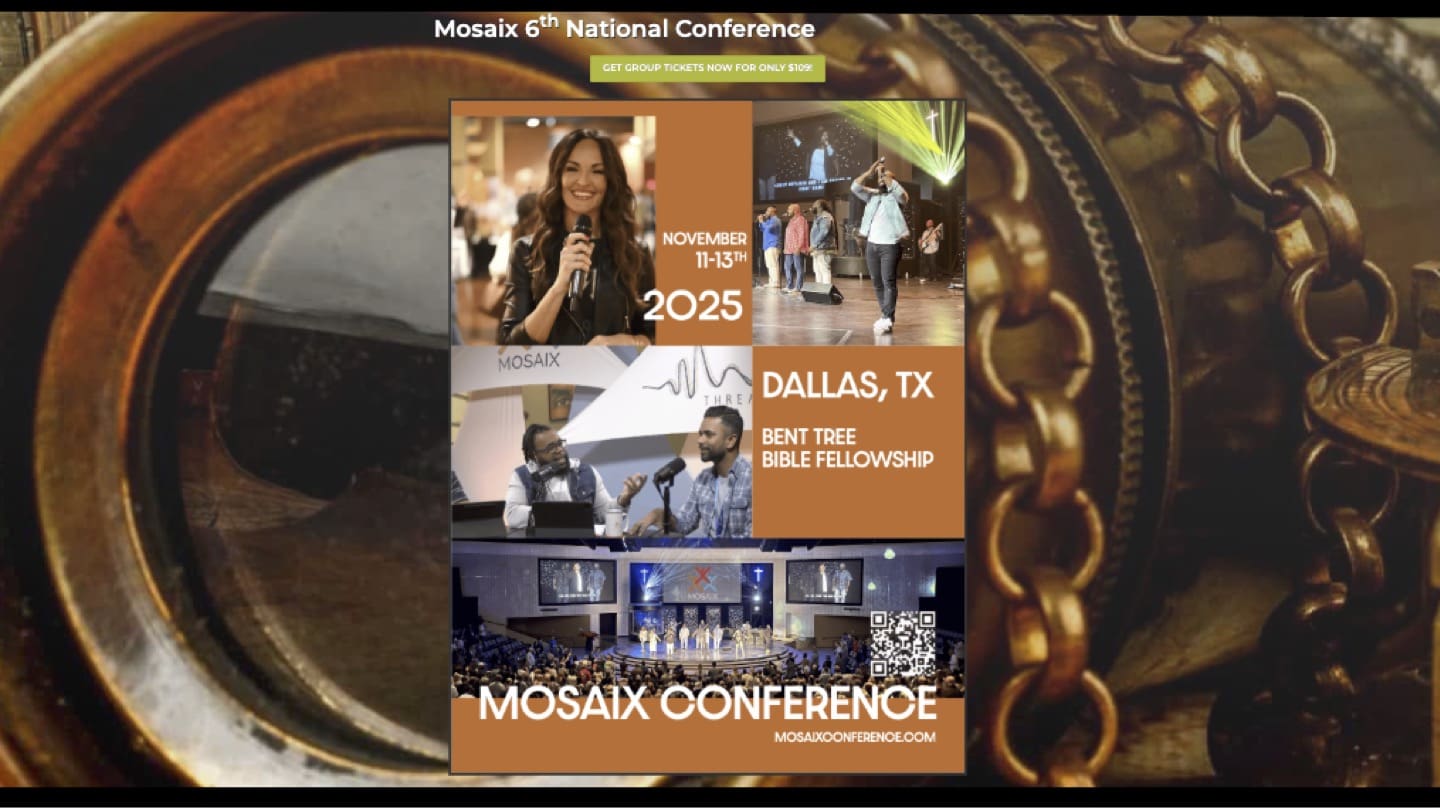
Mark planted the Mosaic Church of Central Arkansas in 2001, a multi-ethnic and economically diverse church in the urban center of Little Rock where he remains the directional leader. In 2004, he co-founded the Mosaix Global Network and continues to serve as CEO and convene its triennial national conference in Dallas, TX. Mark has written eight books including Building a Healthy Multi Ethnic Church; Disruption; and The Coming Revolution in Church Economics.

Lisa Fields

Jude 3 Project

Lisa Fields is a highly sought-after Christian apologist known for her dedication to biblical literacy and her passion for sharing God’s love. Initially planning a career in finance, her life took a transformative turn during a New Testament course at the University of North Florida, where her faith was deeply challenged. This experience led her to pursue a Master of Divinity at Liberty University and ultimately launch the Jude 3 Project, an initiative aimed at equipping the Black Christian community with tools to understand and defend their faith. Through the Jude 3 Project, Fields has made significant contributions, including hosting the Courageous Conversations conferences, developing apologetic curricula, and addressing critical issues through her YouTube series and podcast. Her work has earned her recognition from Christianity Today and other honors. Beyond her apologetic efforts, Fields has ventured into production, contributing to documentaries like Unspoken and Juneteenth: Faith and Freedom, which explore the Christian heritage of Africa and African descendants. Despite her accolades, Fields remains committed to advancing the gospel and empowering others in their faith journey.

Steve Carter

Forest City Church

Steve Carter is the best-selling author of The Thing Beneath The Thing and is the host of the Craft and Character podcast. He is a personal coach to communicators who are discovering their unique voice and desiring to take their skills to the next level. He currently serves as a teaching pastor at Forest City Church and teaches regularly at churches, conferences, and various businesses worldwide. Steve lives outside Chicago, Illinois, with his wife and two kids.

Rick Warren

(via video)

Rick Warren is an innovative pastor, renowned author, and global influencer. The various ministries Pastor Rick has created are a multi-faceted expression of his heart to bring the whole Gospel to the whole world.

Mandy Arioto

MomCo

Mandy Arioto is the President and CEO of The MomCo and is widely known for her unique takes on parenting, relationships, spiritual and cultural issues. Through MomCo, which influences millions of moms through thousands of groups internationally, Mandy serves as the voice of one of the most influential mothering organizations in the U.S. and around the world. She regularly speaks to national and international audiences. She and her husband, Joe, live in Denver, Colorado where they love rock climbing and adventuring with their three kids. Mandy’s most recent book, Have More Fun: How to Be Remarkable, Stop Feeling Stuck, and Start Enjoying Life, is available wherever books are sold.

No Longer Taboo: Mobilizing the Church to Reach and Heal Those in Porn Addiction

In this breakout, Immanuel Guarino will tackle head-on one of the central obstacles facing churches and a critical opportunity to reach out communities. Pornography affects 68% of men in the church yet is often undiscussed and even rarely addressed. In this breakout, you will learn the depth of this issue both inside the church and how it is affecting communities. Utilizing strategies and tools developed in equipping churches, Immanuel will offer church leaders and pastors practical insight in how to empower their congregations and communities to break free.

Emmanuel Guarino

Emmanuel Guarino is the Founder and CEO of Team Vulnerable, a ministry dedicated to helping people break free from porn addiction.

Leadership RoundTable: Ministry and Mission in Secular Spaces

In this Leadership RoundTable, join Christian pastors and ministry leaders for a discussion on the central challenges and opportunities that churches face in ministering in secularizing communities. As secularization continues to take root in North America, churches are increasingly encountering a new society with its own distinct needs, questions, and spiritual motivators. Join these leaders as they discuss their own experiences, how they have found success in ministry in these spaces, and offer practical tools for pastors and ministry leaders rooted in similar secularizing communities.

Joel Zantingh

Joel Zantingh has over thirty years of Christian service in local, national, and international roles. His work with Lausanne is being done alongside his role as the Canadian coordinator for the World Evangelical Alliance’s Peace and Reconciliation Network, in partnership with the Evangelical Fellowship of Canada. He is also currently working on a Doctorate.

The God of Props: Seeing the World through the Lens of Redemptive Need

In this breakout, Pastor Steve will lead pastors and ministry leaders through a session on how to communicate effectively the deep truths of God’s redemptive story. Drawing upon his experience as a leader at Willow Creek Community Church during its season of upheaval, Steve will outline how the grief, trauma, and pain of those around us are compelling opportunities for gospel healing. This opportunity requires critical and nuanced skills, yet offers untold potential for preachers to engage their community afresh with the gospel of Jesus.

Steve Carter

Steve Carter is a pastor, speaker, author, podcast host, the former lead teaching pastor of Willow Creek Community Church, and the author of several books including The Thing Beneath the Thing.

The Digital Sanctuary: Creating Sacred Spaces on Social Media

In this breakout, we will focus on how to maximize a local church’s limited resources to minister on social. I’ll highlight some best practices that have come out of the research (a bit on the spaces and places paper), some research I’ve done since then on practical best practices, and then I’d like to reach out to Sarah Dawes, who is the Communications Director for Calvary Church of Naperville, to have her and some of her team participate in a group discussion. They have a really strong sense of how to use social well so I think having a church that is doing it well but still very much in progress would be a good way to add flesh to the concepts for those in attendance.

Todd Korpi

Dr. Todd Korpi is a pastor, missiologist, and researcher, currently serving as the Church Planting Commission Coordinator for OneHope and Lead Researcher of the Digital Mission Consortia at the Wheaton College Billy Graham Center.

Transforming Church Evangelistic Culture for Lasting Change *CEI Alumni Exclusive*

AACEI and CEI alumni, please join us for an inspiring workshop focused on empowering churches to maintain and amplify their evangelistic impact long after completing our cohort programs. We will delve into successful strategies for sustaining momentum and explore ways the Wheaton College Billy Graham Center Evangelism Institutes can further equip and support your journey towards a dynamic and enduring church culture. Be ready to engage and share, as we learn together how to drive lasting change in your ministry!

Sean McDowell

Sean McDowell is the Director of the Church Evangelism Institute and an ordained pastor in the Evangelical Free Church of America with over 27 years of ministry Experience.

Election-Year Politics: Navigating Faithfully in a Season of Division

In this season of division, this breakout offers a guide to navigate the rocky waters of politics. Avoiding the pitfalls of partisan hyperbole and demonization, Dr. Amy Black will provide insights for pastors and church leaders striving to understand how to lead their people amid such turmoil. This breakout will emphasize non-partisan and gospel-centered strategies for leaders, fostering dialogue in how to lead faithfully.

Amy Black

Amy E. Black is Professor of Political Science at Wheaton College (IL). She earned her Ph.D. in Political Science at M.I.T. A specialist in American Government, her research interests include religion and politics, the Presidency, and Congress. She is a past president of Christians in Political Science and served as an American Political Science Association Congressional Fellow in the office of Representative Melissa A. Hart.

Leadership RoundTable: Pastoring a Multi-Ethnic Church

In this Leadership RoundTable, learn from four pastors as they walk through their experience shepherding congregations and communities through the journey of multiethnic leadership. Each pastor brings unique leadership perspectives and convictions, sparking a conversation about what they see as opportunities and challenges for other pastors to learn from as they seek to lead a church that welcomes the full breadth of God’s Kingdom.

Aubrey Sampson
Greg Armstrong
Joyce Dalrymple
Daniel Kim

Aubrey Sampson is the co-planter and teaching pastor at Renewal Church in Chicagoland and teaching pastor at Timberlake in Seattle, as well as the author of several books including her upcoming release, Big Feelings Days.

Greg Armstrong is the founding and lead pastor of Renew Church, a multiethnic church community in Chicago’s western suburbs. Greg also serves as the Director of Renew Collective, a community of songwriters, musicians and artists, and the host of The Gospel and Race Podcast. 

Joyce Koo Dalrymple is a pastor, speaker, and podcast host. She leads Refuge for Strength, is on the teaching team for Church360, and regular speaker at churches and retreats Joyce received a BA from Stanford University, a JD from Boston College, and an MDiv from Metro Atlanta Seminary.

Daniel Kim is the Student Pastor at Gospelife Church. As a third-culture kid born and raised in Korea and Japan, he has been deeply influenced by multiple cultural experiences. Daniel earned his MA in Intercultural Studies from Wheaton College and is currently pursuing a DMin at Southern Seminary.

Fundraising and Church Economics: Why Tithes and Offerings are No Longer Enough and What You Can Do About It

In this breakout, Mark will tackle the growing challenge facing pastors and ministry leaders around finances and resources. As economic models in North America change, churches that will thrive are those who are thinking innovatively and creatively about how to leverage their assets and resources to sustain effective ministry. Drawing upon his work with the Mosaix Institute, Mark will offer leaders practical insights into how to build effective and healthy financial models as well as what leaders should expect in the coming decades.

Mark DeYmaz

A thought-leading writer and recognized champion of the Multiethnic Church Movement, Mark DeYmaz planted the Mosaic Church of Central Arkansas in 2001 where he continues to serve as directional leader. In 2004, he co-founded the Mosaix Global Network with Dr. George Yancey, and today serves as its CEO/president. Mark has written seven books including The Coming Revolution in Church Economics (Baker, 2019) and Building a Healthy Multi-Ethnic Church (Jossey-Bass, 2007). He is a contributing editor to Outreach magazine.

Mobilizing GenZ to Reach Their Peers

Join us for a practical, hands-on experience that will help you understand more about what defines Gen Z and their views on evangelism, learn about strategies that God is using to introduce Gen Z to the gospel, and apply proven principles for mobilizing this generation for mission.

Kathy Kurda Petrash
Bill Kollar

Kathy Hurda Petrash is the Director of Strategic Partnering, Christian Colleges with Cru. Bill Kollar is the Director of Evangelistic Initiatives for Cru.

Leading your Church to Mission

In this breakout, Pastor Kevin Harney will join a collection of leading pastors for a focused session on the critical leadership challenges facing pastors in generating cultures of evangelism and outreach in their congregation. An opportunity to hear how pastors have created, transitioned, or expanded their evangelistic culture, this breakout will offer practical case studies for leaders seeking to make substantive impact within their own people. As mobilizing churches to evangelism is a monumental leadership challenge, join Kevin for this breakout to discern practical strategies and innovations.

Kevin Harney

Kevin Harney is the Lead Pastor at Shoreline Church in Monterey, CA as well as the author of multiple books on evangelism and leadership including Organic Outreach, and No is a Beautiful Word.

The Sustainable Pastor: Dealing with Burnout in your Organization and in Yourself

In this breakout, addresses the growing issue of pastoral and ministry leader burnout. Few issues have hindered and even destroyed the effectiveness of church or ministry leadership than unsustainable practices and expectations. An emerging voice on the intersection of effective gospel mission and sustainable and health patterns of leadership, Dr. Horton will outline some of the underlying causes that are driving organizations and their leaders towards burnout before turning to how healthy leadership can catalyze long term effectiveness.

D.A. Horton

D.A. Horton serves as an Assistant Professor and Program Director of the Intercultural Studies program at California Baptist University. He is also blessed to serve as an Associate Teaching Pastor at The Grove Community Church. He has authored multiple books including G.O.S.P.E.L., DNA: Foundations of the Faith, and Are You Good with God?

Churches of Welcome for the World That’s Arriving

We’re living amid the greatest humanitarian crisis in human history: the mass global displacement of more than 120 million people. That number continues to grow daily. And while God isn’t the author of conflict, disaster, and war, he is sovereign in how people are scattered all around the world for the purpose of the gospel. Join Daniel Yang as he unpacks how you and your church can welcome the most vulnerable from around the world as your neighbor to show and share the love of Jesus.

Daniel Yang

Daniel Yang is the National Director of Churches of Welcome, an initiative of World Relief. Prior to that he was the director of the Church Multiplication Institute at the Wheaton College Billy Graham Center. Pursuing his Ph.D. in Intercultural Studies at TEDS, Daniel has been a pastor, church planter, engineer and technology consultant.

Compelling Preaching in a World Tuned Out

In this breakout, Dr. Hill will walk pastors and ministry leaders through the ways our communication strategies and rhetoric must adapt to meet an emerging audience in our pews and communities. Just as it is up to every new generation to reexamine and refine the ways we preach to a new generation of hearers, this new world of online communication has revolutionized both the challenges and opportunities for the pulpit. This breakout will offer critical strategies to communicate the timeless truths of the gospel in ways that our people will tune-in and respond.

Theon Hill

Theon Hill, a Ph.D. of Communication, is an associate professor of communication at Wheaton College with published works and presentations on the intersection of race, civil rights, and religion in America. Dr. Hill serves as the co-Director of the Center for Faith and Innovation as well as on the Advisory Council for the WCBGC Preaching Institute.

Digital Shepherds: Leading the Church into the Tech Era

This workshop offers a comprehensive understanding of the church’s role in embracing and leading technological advancements. It begins with an exploration of the historical evolution of church technology, followed by insights into current trends and innovations relevant to ministry. Participants will discuss strategies for proactively responding to tech advancements, including overcoming resistance to change. Practical steps for integrating technology into worship, administration, and other aspects of church life will be provided. Emphasizing the importance of fostering a tech-savvy church culture, this workshop will equip participants to lead their congregations in leveraging technology for enhanced ministry impact.

Hunter Guy

Hunter Guy, a product designer from Dolton, IL, is the Co-Founder and CEO of Study Aloud, where she innovates in the Christian education-tech space. She holds a BFA in Industrial Design from the University of Illinois at Urbana–Champaign and blends her spiritual beliefs with her tech expertise to create award-winning mobile apps and SaaS applications. Hunter has played vital UX leadership roles for major firms, including Office Depot. Beyond her tech career, she has directed several Christian nonprofits, focusing on organizational enhancement and community impact. Currently, she is advancing her education with a Master of Divinity at Liberty University and mentors high school students through LINK Unlimited Scholars.

New Innovations for Evangelistic Church Culture Change

In this breakout for CEI and AACEI alumni, Rick will outline the recent innovative strategies and tools developed by the WCBGC. Through Rick’s tenure, CEI has grown dramatically to an international movement across multiple denominations, cultures, and regions. Central to this growth has been its adaptation to the needs of churches and their pastors, incorporating leading research and cross-cultural expertise into a cohort strategy that is generating substantive transformation. This breakout is an opportunity for CEI and AACEI alumni to hear about these new and innovative tools, incorporating these tools into their evangelistic and missional strategies.

Rick Richardson

Dr. Rick Richardson, Executive Director of the Research and Church Evangelism Institutes, the Luis Palau Chair of Evangelism, and Professor of Evangelism and Leadership. Rick is a Professor of Evangelism and Leadership at Wheaton College and consults widely with churches on Evangelism, healing, reconciliation, the emerging generation, and contemporary missional churches and missional movements.

How to Get Evangelistic Change in Your Church without Killing It

In this breakout, Pastor Jenkins will address the central challenge of how to lead your congregation to a culture of evangelism. Drawing upon his experience in pastoring Glenarden, Pastor Jenkins will walk through the central strategies that have proven effective in leading his congregation to become a conversion community. This breakout offers pastors practical skills and tools they can implement in their own contexts, utilizing many of the proven strategies deployed in the Church Evangelism Institute of the WCBGC.

John Jenkins

Pastor John K. Jenkins Sr. is senior pastor of First Baptist Church of Glenarden and the Chairman of the Wheaton College Billy Graham Center African American Church Evangelism Institute. Pastor Jenkins also serves as the chair of the National Association of Evangelicals and is on the board of World Vision, U.S., Denver Seminary and GlocalNet.

Engaging LGBTQ Friends and Neighbors in Faith Conversations

In this breakout, we will tackle the challenge of engaging members of the LGBTQ community in our neighborhoods. Dr. Mark Yarhouse offers practical solutions and insights for Christians struggling with a pressing cultural issue of our society. This breakout is particularly encouraging and useful for pastors and ministry leaders seeking understanding and tools for addressing questions of sexuality and gender within their community and organization.

Mark Yarhouse

Mark Yarhouse (PhD) is the Rech Endowed Chair in Psychology and the Director of the Sexuality & Gender Identity Institute at Wheaton College, as well as the author of multiple books including his most recent Gender Identity & Faith.

Welcome at the Table: How to Mobilize Families your Church Reach your Community

In this breakout, Kelli will draw upon the extensive and substantive work of MomCo in mobilizing the whole church for mission throughout North America. This breakout is designed specifically for pastors ready to revolutionize their approach to church engagement, drawing out innovative strategies and actionable insights that foster a vibrant, engaged community within your congregation. This workshop is your gateway to not only mobilize the untapped resources of your church but to enhancing the sense of unity and purpose among every member. Whether you’re dealing with declining attendance or looking to energize your congregation, this breakout will offer the tools and inspiration you need to drive meaningful engagement and build a thriving church community.

Kelli Smith

Kelli Jo Smith Vice President of Church Engagement and Marketing at The MomCo. For 17 years, Kelli has been a passionate advocate for growing Christian non-profits and empowering moms, driving initiatives that make a global impact.

Eight Principles to Reach GenZ

This workshop equips pastors and church leaders with actionable strategies to effectively engage Generation Z, a tech-savvy and diverse group that values authenticity. Participants will explore research-based recommendations for revitalizing church outreach, fostering conversion communities, and creating inclusive environments that resonate with Gen Z. By implementing these strategies, churches can bridge the generational gap, build meaningful connections, and create a more relevant and impactful ministry for young adults in today’s rapidly changing world.

Brandi Williams

Brandi Williams is the Director of the WCBGC’s African American Church Evangelism Institute, leading a dynamic institute dedicated to equipping churches and pastors for catalyzing conversionary communities.

Great Evangelists in Church History

In this breakout, Drs Timothy Larsen, Jennifer McNutt, and Vince Bacote will explore some of the most significant evangelists from history, drawing out key lessons and inspiration for how pastors and church teams can impact their communities today. In learning how to communicate the timeless gospel in a new era, we can look to our collective past for surprising, inspiring, and convicting lessons for how the Church has responded to similar contexts. Joined by distinguished faculty of Wheaton College’s Litfin Divinity School, this breakout will offer the unique opportunity to discover new stories, explore historical case studies, and think beyond our time for how to be effectively on mission today.

Tim Larson
Jennifer McNutt
Vincent Bacote

Timothy Larsen is McManis Professor of Christian Thought and Professor of History in the Litfin Divinity School at Wheaton College. He is the current president of the American Society of Church History and has written or edited over twenty books on church history.

The Rev. Dr. Jennifer Powell McNutt is the Franklin S. Dyrness Associate Professor in Biblical and Theological Studies in the Litfin Divinity School at Wheaton College. A leading scholar on John Calvin and the Reformation, Dr. McNutt is widely acclaimed for both her scholarship and work in the classroom through integrating the Christian faith and learning.

Vincent Bacote is the Professor of Theology and Director of the Center for Applied Christian Ethics in the Litfin Divinity School at Wheaton College. He has published several works including Reckoning with Race and Performing Good News (2020) and The Political Disciple (2015) in addition to his work being featured in magazines such as Christianity Today and Think Christian.

Ed Stetzer

Talbot School of Theology

Ed Stetzer, Ph.D., is the Dean and Professor of Leadership and Christian Ministry at Talbot School of Theology at Biola University. He also serves as Distinguished Visiting Scholar at Wycliffe Hall at Oxford University, where he teaches twice a year. Stetzer has planted, revitalized, and pastored churches; trained pastors and church planters on six continents; earned two master’s degrees and two doctorates; and he has written hundreds of articles and a dozen books. He is Regional Director for Lausanne North America, is the Editor-in-Chief of Outreach Magazine, and regularly writes for news outlets such as USA Today and CNN. His national radio show, Ed Stetzer Live, airs Saturdays on Moody Radio and affiliates. Stetzer serves his local church, Mariners Church, as Scholar in Residence & Teaching Pastor.